
FERONIX RUST PROTECTION GUIDE
How to Prepare Rusty Metal Before Painting | Rust Treatment Guide
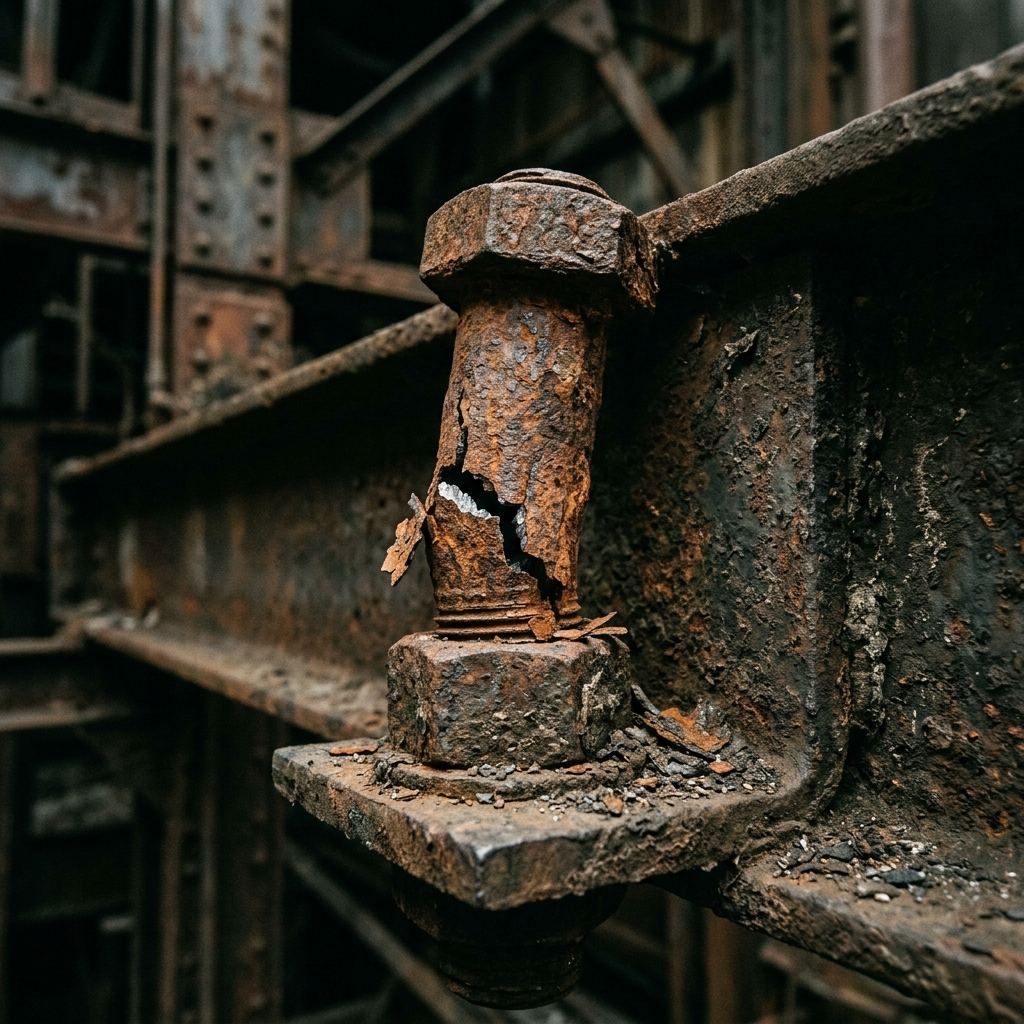
How to Prepare a Rusty Metal Surface Before Painting
Rust doesn't usually appear overnight.
It begins with small changes on the metal surface and can gradually develop into:
- Orange or brown rust spots
- Flaking corrosion
- Bubbling paint
- Peeling coating
- Pitting
- Scaling
- Structural deterioration
When rust appears, one of the biggest mistakes is to simply take a paintbrush and cover it.
Painting over unstable rust doesn't solve the underlying surface problem.
The better approach is:
IDENTIFY → CLEAN → REMOVE → TREAT → PRIME/DTM → PROTECT
And this is where the FERONIX corrosion-protection system can help.
Why Surface Preparation Is Important Before Painting Metal
A protective coating can only perform properly when the underlying surface is suitably prepared.
Rusty metal may contain:
- Loose rust
- Rust scale
- Dust
- Dirt
- Oil
- Grease
- Moisture
- Salts
- Old loose paint
- Contaminants
If these remain beneath the coating, they can contribute to coating failure.
Possible problems include:
- Peeling
- Blistering
- Poor adhesion
- Rust recurrence
- Uneven finish
- Premature coating failure
Therefore:
The quality of a metal-protection system begins with surface preparation.
Can You Paint Directly Over Rust?
This is one of the most common questions.
The answer is: not simply because the surface is rusty.
The correct approach depends on:
- Type of rust
- Severity of corrosion
- Condition of existing paint
- Metal substrate
- Product specification
- Required protection
- Environmental exposure
Loose and unstable rust should generally be removed or otherwise appropriately addressed before applying a protective coating.
A DTM coating also does not mean:
“Apply paint directly over loose rust.”
DTM means:
Direct-to-Metal
not:
Before touching the rust, inspect the entire metal component.
Look for:
Surface Rust
Thin orange/brown corrosion.
Flaking Rust
Loose corrosion that can be removed mechanically.
Heavy Rust Scale
Thick layers of corrosion.
Pitting
Small cavities or holes caused by corrosion.
Peeling Paint
Existing coating that has lost adhesion.
Blistering
Raised areas underneath the existing coating.
Weld Corrosion
Rust around welded joints.
Edge Corrosion
Rust developing around sharp edges.
Crevice Corrosion
Corrosion around joints, gaps and connections.
Why Inspection Matters
Not all rusty surfaces require the same treatment.
A slightly rusted iron gate and a severely corroded steel structure should not be treated identically.
A simple classification can help.
For structural steel, severe corrosion may require professional inspection before coating.
Step 2 — Remove Dirt, Oil and Grease
Before dealing with the corrosion itself, remove surface contaminants.
Common contaminants include:
- Oil
- Grease
- Dirt
- Dust
- Mud
- Industrial residues
- Salt deposits
Why?
Because rust treatment and coatings need proper contact with the substrate.
Clean Surface = Better Starting Point
The cleaning method should be appropriate for the substrate and coating system.
Step 3 — Remove Loose Rust
Loose rust should not simply remain underneath the new coating.
Mechanical preparation methods can include:
- Wire brushing
- Scraping
- Abrasive tools
- Sanding
- Grinding
- Abrasive blasting where appropriate
The objective is to remove unstable corrosion and create a suitable surface for the selected treatment/coating system.
What Is Loose Rust?
Loose rust is corrosion that:
- Flakes easily
- Can be scraped away
- Has poor attachment to the substrate
- Is visibly unstable
- Can be removed mechanically
If you can easily dislodge it, it should not simply be sealed under a protective coating without considering the product requirements.
Step 4 — Decide: Rust Removal or Rust Conversion?
This is a critical decision.
There are two fundamentally different approaches.
Rust Removal
The objective is to physically or chemically remove corrosion products.
The objective is to chemically treat suitable remaining rust and convert it into a more stable form according to the product's chemistry and instructions.
They are not the same product category and should not be treated as interchangeable.
When Should Rust Be Removed?
Rust removal is particularly relevant when:
- Rust is loose
- Rust is heavily scaled
- Corrosion products are unstable
- Mechanical removal is practical
- The coating system requires a prepared metal surface
FERONIX RUSTKLEEN
can be considered for suitable rust-removal applications according to its technical instructions.
When Is Rust Conversion Considered?
Rust conversion can be considered when:
- Suitable residual rust remains
- Complete removal is difficult or impractical
- The product is designed for that application
- The substrate is otherwise appropriately prepared
FERONIX RUSTCON
is FERONIX's rust-conversion/treatment solution.
It should be used according to its TDS and application instructions.
Important: Rust Converter Is Not a Magic Rust Eraser
A rust converter does not mean:
“Apply it to anything rusty and paint immediately.”
The surface still needs appropriate preparation.
Remove:
- Loose rust
- Loose scale
- Dirt
- Oil
- Grease
- Unstable paint
before applying the treatment according to the product instructions.
Step 5 — Treat Suitable Remaining Rust
After mechanical preparation, some rust may remain in:
- Small pits
- Crevices
- Surface irregularities
- Difficult-to-reach areas
Where technically appropriate, a rust converter can be used.
Its role is:
TREAT
rather than simply covering the corrosion.
Always follow the manufacturer's instructions for:
- Application
- Coverage
- Reaction time
- Drying
- Cleaning/rinsing requirements, if applicable
- Subsequent coating
Step 6 — Allow the Surface to Become Suitable for Coating
Before applying a primer or DTM coating, make sure the surface meets the coating requirements.
The substrate should not have unwanted:
- Moisture
- Dust
- Loose particles
- Oil
- Grease
- Unreacted treatment residue
- Unstable coating
The exact requirements depend on the selected product.
Step 7 — Decide Between Primer and DTM
Once the surface is prepared, you have another important decision:
Do you need a conventional primer system?
or
Can you use a suitable DTM coating?
Option A — Primer-Based System
Where a dedicated primer is required:
CERAMAX serves the:
PRIME
stage.
Option B — Direct-to-Metal System
Where a suitable DTM coating is specified:
CORROX serves the:
PROTECT
stage.
This can eliminate the need for a separate primer where the DTM specification permits.
FERONIX Rusty Metal Protection System
This is where FERONIX becomes more than just an anti-rust paint.
STEP 1 — IDENTIFY
Understand the condition of the metal.
↓
STEP 2 — CLEAN
Remove dirt, oil, grease and contaminants.
↓
STEP 3 — REMOVE
Use appropriate preparation and FERONIX RUSTKLEEN where suitable.
↓
STEP 4 — TREAT
Use FERONIX RUSTCON where suitable residual rust requires conversion/treatment.
↓
STEP 5 — PRIME
Use FERONIX CERAMAX when the selected system requires a dedicated primer.
↓
STEP 6 — PROTECT
Use FERONIX CORROX for suitable SI-PU Direct-to-Metal applications.
How to Prepare a Rusty Iron Gate
Iron gates are one of the most common rusty-metal applications.
Step 1
Inspect the gate.
Pay particular attention to:
- Bottom sections
- Hinges
- Welds
- Corners
- Joints
- Scratched areas
Step 2
Remove dirt, dust and grease.
Step 3
Remove loose paint and unstable rust.
Step 4
Use appropriate rust removal/treatment where required.
Allow the surface to reach the condition required for coating.
Step 6
Select:
CERAMAX if a primer-based system is required.
or
CORROX if a suitable DTM system is specified.
Step 7
Apply according to the product TDS.
How to Prepare Rusty Window Grills
Window grills often develop rust around:
- Welds
- Corners
- Wall connections
- Bottom sections
- Scratched areas
The process should be:
Inspect → Clean → Remove loose rust → Treat where appropriate → Prime or DTM → Protect
For a suitable DTM application:
Prepared Grill → FERONIX CORROX
How to Prepare Rusty Balcony Railings
Balcony railings are continuously exposed to:
- Rain
- Humidity
- Sunlight
- Dust
- Water accumulation
Check:
- Welds
- Base plates
- Joints
- Corners
- Fasteners
- Scratched areas
Prepare the substrate before applying the selected FERONIX coating system.
How to Prepare Rusty Boundary Fencing
Boundary fencing often has large numbers of:
- Welds
- Joints
- Corners
- Posts
- Ground-contact areas
Ground-level areas can be particularly vulnerable to moisture.
A proper inspection and preparation process is essential before coating.
How to Prepare Rusty Steel Structures
Steel structures require greater attention because corrosion may affect more than appearance.
Inspect:
- Structural members
- Welds
- Bolted connections
- Edges
- Joints
- Water traps
- Previously repaired areas
If significant section loss, deep pitting or structural deterioration is present, the metal should be professionally assessed before relying on a coating system.
A coating protects the metal.
It does not restore steel that has already been structurally lost.
How to Prepare Rusty Machinery
Machinery may contain:
- Oil
- Grease
- Hydraulic fluids
- Dust
- Chemicals
- Existing coatings
Cleaning and degreasing become particularly important.
Before selecting a coating, identify the operating environment.
How to Prepare Rusty Agricultural Equipment
Agricultural equipment may have contamination from:
- Mud
- Fertilizers
- Chemicals
- Oil
- Grease
Clean the equipment thoroughly before corrosion treatment and coating.
Pay special attention to areas where water and mud accumulate.
How to Prepare Rusty Metal in Coastal Areas
Coastal metal can have salt contamination even when the surface does not look heavily corroded.
Salt residues can remain on metal surfaces and contribute to corrosion.
Preparation may therefore require particular attention to:
- Salt contamination
- Washing/cleaning
- Rust removal
- Surface preparation
- Drying
The coating system should then be selected according to the actual exposure and technical specification.
How to Prepare Rusty Metal During Monsoon
Monsoon conditions can make metal preparation more difficult.
Potential issues include:
- High humidity
- Wet surfaces
- Condensation
- Rainwater
- Slow drying
- Water trapped in joints
Do not coat wet metal simply because the surface looks clean.
The substrate and environmental conditions must meet the product application requirements.
Surface Preparation for DTM Paint
DTM coatings require properly prepared metal.
A typical process is:
Apply FERONIX CORROX
This is the correct interpretation of:
For a conventional primer system:
Apply compatible subsequent coating
How Much Rust Needs to Be Removed?
There is no single answer for every coating system.
It depends on:
- Product specification
- Surface condition
- Rust severity
- Exposure
- Required performance
- Preparation method
For some systems, a high level of rust removal may be required.
For other specifically designed rust-treatment systems, controlled residual rust may be acceptable.
Always follow the selected product's TDS.
Can Sanding Remove Rust?
Yes, sanding can remove light surface rust and prepare small areas.
It can be practical for:
- Iron gates
- Grills
- Railings
- Small fabricated components
For heavier corrosion, other mechanical preparation methods may be more appropriate.
Can a Wire Brush Remove Rust?
A wire brush can help remove:
- Loose rust
- Flaking corrosion
- Loose paint
- Surface deposits
It is useful for small repair jobs.
However, a wire brush should not automatically be considered sufficient for every corrosion condition.
Can Grinding Remove Rust?
Grinding can remove heavier corrosion and old coatings from suitable metal surfaces.
However, excessive grinding can alter the metal surface.
The preparation method should therefore be appropriate to the substrate and coating specification.
When Is Abrasive Blasting Used?
Abrasive blasting is commonly used for larger or more demanding steel-coating applications where a controlled surface preparation profile is required.
It can be particularly relevant for:
- Structural steel
- Industrial equipment
- Large fabrication
- Heavy corrosion
- New steel requiring specified preparation
The required preparation grade should be established by the coating specification.
Rust Removal Chemicals vs Mechanical Rust Removal
Both approaches can have a place.
Mechanical Methods
Examples:
- Wire brushing
- Sanding
- Grinding
- Abrasive blasting
Chemical Methods
Suitable rust-removal or rust-treatment products may be used where appropriate.
FERONIX RUSTKLEEN
For suitable rust-removal applications.
FERONIX RUSTCON
For suitable rust-conversion/treatment applications.
The correct choice depends on:
- Rust severity
- Surface accessibility
- Project size
- Metal condition
- Coating system
- Product instructions
Common Mistakes When Preparing Rusty Metal
Mistake 1 — Painting Over Loose Rust
One of the most common mistakes.
Mistake 2 — Ignoring Oil and Grease
Coating may not properly adhere.
Mistake 3 — Leaving Loose Paint
Unstable old coating can cause the new coating to fail with it.
Mistake 4 — Applying Rust Converter Over Heavy Loose Rust
Loose corrosion should first be appropriately addressed.
Mistake 5 — Applying Paint While the Metal Is Wet
Moisture can compromise the coating process.
Mistake 6 — Ignoring Welds
Welds and surrounding areas often require additional attention.
Mistake 7 — Ignoring Edges
Sharp edges can be difficult areas for coating coverage.
Mistake 8 — Assuming DTM Means No Preparation
It does not.
Mistake 9 — Using Primer Without Checking Compatibility
Primer and topcoat compatibility matters.
Mistake 10 — Applying Too Much Paint
More paint does not automatically equal more protection.
How Do You Know the Surface Is Ready for Painting?
Before coating, check:
Surface
Is unstable rust removed?
Cleanliness
Are oil and grease removed?
Dust
Is loose dust removed?
Moisture
Is the surface suitably dry?
Existing Coating
Is remaining old coating sound and compatible?
Treatment
Has any rust treatment completed according to its instructions?
Profile
Does the surface meet the selected coating requirements?
Only then should the protective coating be applied.
Rust Preparation Checklist
Before applying FERONIX:
□ Use RUSTKLEEN where appropriate
□ Use RUSTCON where appropriate
□ Check the treated surface
□ Select primer or DTM system
□ Use CERAMAX where a primer is required
□ Use CORROX where a suitable DTM system is specified
This gives FERONIX a simple philosophy:
REMOVE → TREAT → PRIME → PROTECT
FERONIX Is Not Just About Covering Rust
A common approach to rust is:
See Rust → Apply Paint
FERONIX promotes a more systematic approach:
That difference is important.
FERONIX doesn't just cover the problem.
FERONIX focuses on preparing the surface before protecting it.
Frequently Asked Questions
How do I prepare rusty metal before painting?
Inspect the surface, remove contaminants and loose rust, prepare the substrate appropriately, treat suitable remaining rust where required and then apply the specified primer or DTM coating.
Can I paint directly over rusty metal?
Not simply because the product is an anti-rust paint. Loose and unstable corrosion should be appropriately addressed first.
What should I use to remove rust before painting?
The appropriate method depends on the rust condition. Mechanical preparation, chemical rust removal or a combination may be used.
What is FERONIX RUSTKLEEN?
FERONIX RUSTKLEEN is a rust-removal solution designed for suitable rust-removal applications.
What is FERONIX RUSTCON?
FERONIX RUSTCON is a rust converter designed to treat suitable remaining rust according to its technical instructions.
What is the difference between RUSTKLEEN and RUSTCON?
RUSTKLEEN is positioned for rust removal, while RUSTCON is positioned for rust conversion/treatment.
Do I need to remove all rust before painting?
The required degree of rust removal depends on the selected coating system and product specification. Loose and unstable rust should not simply be covered.
Can I use rust converter instead of rust remover?
Not necessarily. Rust converter and rust remover perform different functions and are selected according to the condition and treatment requirements.
Do I need primer after rust treatment?
It depends on the coating system. If a dedicated primer is required, FERONIX CERAMAX may be considered. If a suitable DTM system is specified, FERONIX CORROX may be applied without a separate primer where permitted.
Can FERONIX CORROX be applied over rust?
CORROX is a DTM coating, but DTM does not mean direct-to-loose-rust application. The substrate must be suitably prepared according to the product specification.
Can FERONIX CORROX be applied without primer?
Yes, where the product specification permits direct application to suitably prepared metal. CORROX is designed as a DTM coating.
What happens if I paint over loose rust?
The unstable corrosion can remain underneath the coating and contribute to premature coating failure, peeling or rust recurrence.
Should I remove old paint before painting rusty metal?
Loose, peeling or unstable old paint should generally be removed. Sound existing coating may be retained only when it is suitable and compatible with the new coating system.
How do I prepare a rusty iron gate?
Clean it, remove loose paint and rust, treat suitable remaining rust if required, prepare the surface and then apply the appropriate primer-based or DTM coating system.
How do I prepare rusty steel?
The method depends on corrosion severity and the required coating system. Larger steel structures may require controlled mechanical or abrasive surface preparation.
Can I paint rusty metal during monsoon?
Application should only be carried out when the substrate and environmental conditions meet the coating's requirements. Wet or condensation-affected metal can compromise coating performance.
Can I use FERONIX products for coastal metal?
Potentially, depending on the product specification and actual exposure. Coastal environments require careful attention to salt contamination and corrosion severity.
Rust Is the Problem. Preparation Is the First Solution.
Don't simply cover corrosion.
Identify it.
Prepare it.
Remove or treat it.
Prime or apply DTM where appropriate.
Protect it.
With FERONIX:
RUSTKLEEN → REMOVE
RUSTCON → TREAT
CERAMAX → PRIME
CORROX → PROTECT
Jahan Rust, Wahan FERONIX.
Protecting Every Surface.