
FERONIX RUST PROTECTION GUIDE
How to Identify Early Corrosion? 10 Warning Signs & Prevention
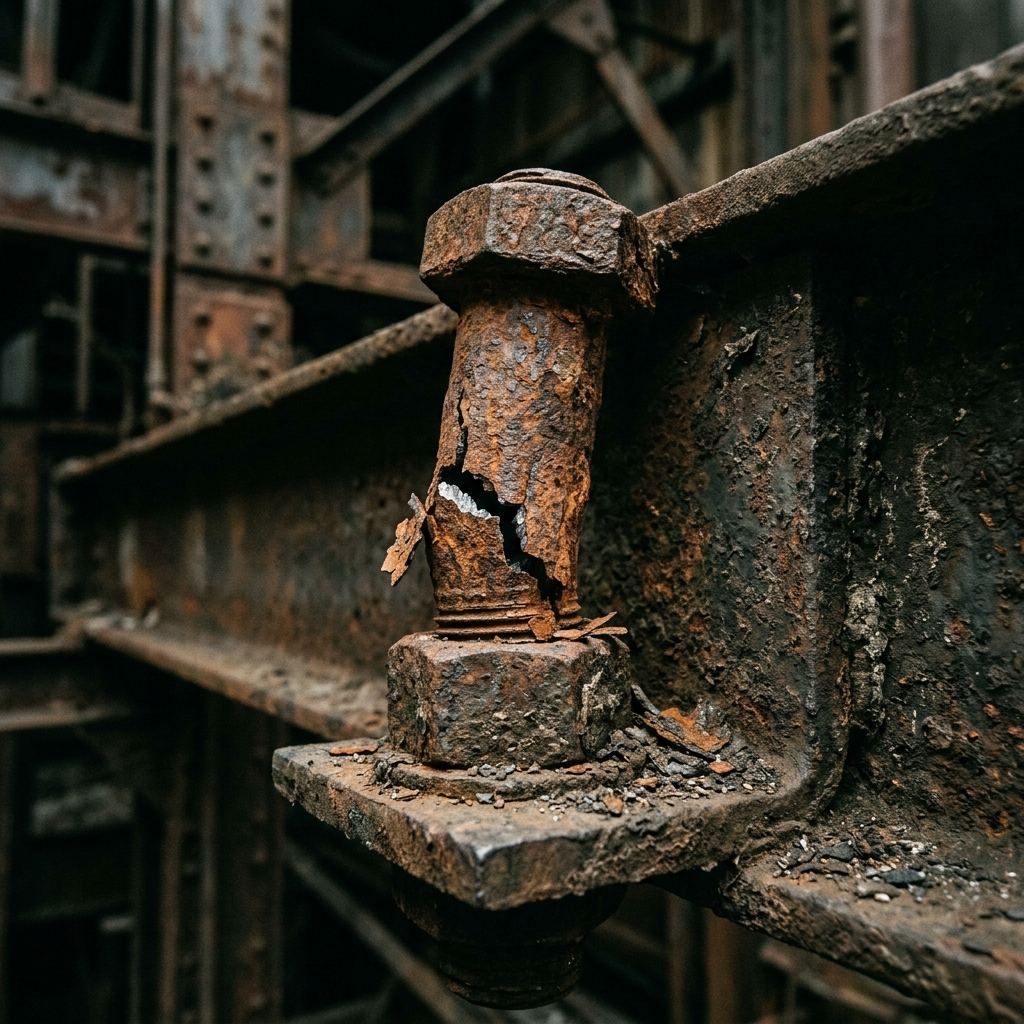
Corrosion rarely begins as a major problem.
In many cases, it starts with something that appears insignificant—a small orange spot, slight paint bubbling, discoloration around a weld, or a rough patch on an otherwise smooth metal surface.
These early warning signs are easy to overlook.
However, identifying corrosion early gives you an opportunity to inspect the surface, determine the cause, prepare the metal correctly and apply an appropriate protection system before the problem becomes more extensive.
This is particularly important for:
- Iron gates
- Window grills
- Balcony railings
- Boundary fencing
- Metal doors
- Steel structures
- Industrial machinery
- Agricultural equipment
- Fabricated metal components
- Outdoor metal surfaces
The earlier corrosion is identified, the earlier appropriate action can begin.
FERONIX approaches corrosion protection through a simple principle:
Identify → Prepare → Treat → Protect
What Is Early Corrosion?
Early corrosion is the initial stage of deterioration occurring on a metal surface as a result of environmental or chemical exposure.
For iron and steel, early corrosion may first appear as:
- Small rust spots
- Orange or reddish-brown discoloration
- Surface staining
- Slight roughness
- Paint blistering
- Coating discoloration
- Rust around edges or welds
At this stage, the metal may still appear largely intact.
That does not mean the corrosion should be ignored.
A small visible defect can indicate that the protective coating has been compromised and that the underlying metal is being exposed to the environment.
Why Is Early Corrosion Detection Important?
A common mistake is to wait until rust becomes extensive before taking action.
By that time, the surface may require significantly more preparation and repair.
Early identification can help you:
Reduce Surface Deterioration
Addressing corrosion before it spreads can help maintain the condition of the metal surface.
Reduce Maintenance Requirements
Small coating defects may be easier to address than widespread coating failure.
Protect Existing Assets
Gates, railings, machinery and steel structures can represent significant investments.
Avoid Premature Replacement
Proper maintenance and corrosion protection can help extend the service life of suitable metal assets.
Maintain Appearance
Rust affects not only metal performance but also the appearance of painted surfaces.
10 Early Signs of Corrosion You Should Not Ignore
Small Orange or Brown Spots
One of the most recognizable early signs of corrosion is a small orange, reddish-brown or brown spot.
You may notice these spots on:
- Iron gates
- Grills
- Railings
- Fencing
- Metal furniture
- Machinery
- Steel structures
A small rust spot may indicate that the protective coating has been damaged or that corrosion has started at a localized area.
What should you do?
Inspect the surrounding coating and metal.
Determine whether the corrosion is superficial, whether the coating is damaged, and whether contamination or moisture may be contributing to the problem.
Paint Bubbling or Blistering
If a painted metal surface develops bubbles or raised areas, do not automatically assume it is only a paint problem.
Blistering can occur for several reasons, including moisture, coating defects and corrosion beneath the coating.
Look closely for:
- Raised paint
- Small bubbles
- Localized swelling
- Discoloration around the affected area
If corrosion is present underneath the coating, simply applying another coat of paint may not address the underlying problem.
Peeling or Flaking Paint
Peeling paint exposes the substrate to the surrounding environment.
Once bare metal becomes exposed, moisture and oxygen can reach the surface.
This can create conditions favourable for corrosion.
Pay particular attention to peeling around:
- Edges
- Welds
- Joints
- Corners
- Fasteners
- Scratches
- Areas exposed to repeated moisture
Loose coating should be properly addressed before a new protective system is applied.
Rough or Uneven Metal Surface
A metal surface that was originally smooth may develop roughness as corrosion progresses.
Run a visual inspection across the surface and look for:
- Rough patches
- Uneven texture
- Pitting
- Flaking
- Powdery corrosion products
- Localized surface deterioration
A change in texture can be an important indication that the metal requires closer inspection.
Rust Around Welds
Welded areas deserve special attention.
Corrosion may appear around:
- Weld beads
- Weld joints
- Fabrication joints
- Structural connections
During inspection, do not only look at the middle of a large metal panel.
Edges, joints and welds can be critical inspection points.
Rust Around Edges and Corners
Edges and corners can be vulnerable because coatings may be thinner or mechanically damaged in these areas.
Check:
- Gate edges
- Door edges
- Sheet-metal corners
- Structural steel edges
- Fencing connections
- Fabricated joints
If corrosion repeatedly starts at the same location, investigate the design, drainage, coating condition and environmental exposure.
Rust Returning After Painting
This is one of the most important warning signs.
If a metal surface was painted recently but rust begins appearing again, the problem may be related to:
- Inadequate surface preparation
- Remaining corrosion
- Contamination
- Moisture
- Incompatible coating system
- Coating damage
- Incorrect application
- Continuous environmental exposure
Painting over the symptom does not necessarily solve the cause.
The surface should be reassessed before recoating.
White, Powdery or Other Surface Deposits
Not every unusual deposit on metal is rust.
Depending on the substrate, environment and coating system, you may see different types of surface deposits or residues.
For this reason, unusual discoloration should be investigated rather than automatically classified as rust.
This distinction is particularly important in industrial environments where chemical exposure or contamination may be involved.
Localized Pitting
Pitting refers to localized areas where corrosion creates small cavities or depressions in the metal surface.
Pitting can be more concerning than simple surface discoloration because the corrosion is concentrated in specific locations.
If you observe:
- Small holes
- Pinpoint depressions
- Deep localized marks
- Uneven metal thickness
the surface may require a more detailed assessment.
For structural or critical components, professional inspection may be appropriate.
Changes Around Fasteners and Connections
Bolts, nuts, screws, brackets and connections should also be inspected.
Look for:
- Rust staining
- Flaking
- Coating failure
- Corrosion around the connection
- Water accumulation
These areas can become localized corrosion points when moisture and contaminants remain trapped.
Early Corrosion vs Advanced Corrosion
Understanding the difference helps determine the urgency of the problem.
The exact severity should always be assessed based on the actual metal condition and application.
Where Does Corrosion Usually Start?
Corrosion does not always occur uniformly.
Certain locations deserve additional attention.
Edges
Edges may have coating-thickness challenges and can experience mechanical damage.
Welds
Welded areas can require careful preparation and inspection.
Joints
Joints may collect moisture and contaminants.
Crevices
Narrow gaps can retain moisture for longer periods.
Fasteners
Bolts, nuts and connections may become localized corrosion points.
Scratches
Mechanical damage can expose the substrate.
Drainage Areas
Standing water or repeated wetting can increase corrosion risk.
What Causes Early Corrosion?
Identifying the visible sign is only half the job.
The next question is:
Why is corrosion occurring?
Common contributing factors include:
Moisture
Rain, condensation and water accumulation can create conditions for corrosion.
High Humidity
High humidity can keep metal surfaces exposed to moisture for extended periods.
Salt Exposure
Coastal environments can expose metal to salt-containing moisture.
Damaged Coatings
Scratches, cracks and peeling paint can expose the metal underneath.
Poor Surface Preparation
Oil, grease, dirt, dust, loose rust or old unstable coating can affect coating performance.
Poor Drainage
Water that cannot drain away may remain in contact with the metal.
Industrial Contaminants
Certain industrial environments can introduce chemicals or contaminants that increase corrosion risk.
Mechanical Damage
Impact, abrasion and repeated contact can damage protective coatings.
How to Inspect Metal for Early Corrosion
You do not always need sophisticated equipment to identify obvious early warning signs.
A basic visual inspection can begin with five questions:
Has the colour changed?
Look for orange, brown, reddish or unusual discoloration.
Has the coating changed?
Look for bubbling, cracking, peeling or flaking.
Has the surface texture changed?
Look for roughness, scaling or localized deterioration.
Where is the corrosion occurring?
Check edges, welds, joints, fasteners and water-trapping areas.
Is the problem returning?
Recurring corrosion can indicate an unresolved surface-preparation or coating-system issue.
A Simple FERONIX Corrosion Inspection Checklist
For Iron Gates
Check:
- Gate frame
- Weld joints
- Hinges
- Bottom edges
- Corners
- Decorative sections
- Scratches
- Areas exposed directly to rain
For Window Grills
Check:
- Welds
- Corners
- Bottom sections
- Paint chips
- Rust spots
- Wall connection points
For Railings
Check:
- Base connections
- Welds
- Handrail joints
- Vertical supports
- Bottom sections
- Areas exposed to standing water
For Steel Structures
Check:
- Structural connections
- Welds
- Edges
- Bolts
- Joints
- Damaged coating
- Water-trapping areas
- Areas exposed to industrial contaminants
What Should You Do When You Find Early Rust?
Do not immediately cover it with another coat of paint.
Instead, follow a structured process.
Step 1 — Inspect
Determine:
- How extensive is the corrosion?
- Is the coating damaged?
- Is the metal exposed?
- Is there pitting?
- Is moisture involved?
- Is the corrosion localized or widespread?
Step 2 — Clean
Remove:
- Dirt
- Dust
- Grease
- Oil
- Salts
- Loose contaminants
Step 3 — Prepare
Loose rust, unstable coating and other unsuitable surface material should be addressed according to the required preparation standard and coating system.
Step 4 — Treat Where Required
Depending on the surface condition and selected system, rust may be removed or treated.
FERONIX RUSTKLEEN can be considered for rust-removal applications.
FERONIX RUSTCON can be considered where rust conversion/treatment is appropriate.
Step 5 — Prime Where Required
Some systems require a dedicated primer.
FERONIX CERAMAX is designed as a ceramic metal primer for suitable primer-based applications.
Step 6 — Protect
Apply an appropriate anti-corrosive coating.
FERONIX CORROX is an SI-PU Direct-to-Metal anti-corrosive coating designed for suitable prepared metal surfaces.
FERONIX Solution Based on Surface Condition
A useful way to understand the FERONIX product range is:
This is not a universal four-step requirement for every project.
The correct sequence depends on the substrate, existing coating, degree of corrosion, environmental exposure and selected coating specification.
When Should You Use Rust Removal?
Rust removal may be appropriate when the corrosion products need to be removed as part of surface preparation.
The objective is to create a suitably prepared surface for the next coating stage.
FERONIX RUSTKLEEN is positioned within the FERONIX range for rust-removal applications.
Before using any rust-removal product, always follow the applicable product instructions, safety requirements and surface-preparation recommendations.
When Should You Use Rust Conversion?
Rust conversion is different from simply removing rust.
A converter is intended to chemically treat suitable remaining rust and transform it into a more stable form as part of a specified coating process.
FERONIX RUSTCON is designed for rust conversion/treatment applications.
The surface should still be properly prepared according to the product instructions.
Rust conversion should not be treated as a substitute for removing loose, flaky or unstable corrosion.
When Is a Primer Required?
Not every metal coating system works in exactly the same way.
Traditional coating systems may use:
Prepared Metal → Primer → Intermediate Coat → Topcoat
A dedicated primer can provide functions such as:
- Adhesion
- Corrosion protection
- Substrate preparation
- Coating compatibility
FERONIX CERAMAX is designed for applications where a ceramic metal primer is required.
For DTM applications where the product specification permits direct application to properly prepared metal, FERONIX CORROX can provide a simplified coating approach.
What Is Direct-to-Metal Technology?
Direct-to-Metal, or DTM, technology refers to coating systems designed to be applied directly to suitable prepared metal substrates without a separate primer step where the product specification allows it.
FERONIX CORROX uses an SI-PU DTM approach for suitable applications.
This can help simplify certain metal-protection processes by reducing the number of coating stages.
However, DTM does not mean:
“No surface preparation required.”
Proper preparation remains essential.
Early Corrosion in Different Environments
Residential Metal
Common examples:
- Gates
- Grills
- Railings
- Fencing
- Doors
Inspect especially after monsoon and periods of high humidity.
Coastal Areas
Look for:
- Frequent rust staining
- Coating breakdown
- Salt deposits
- Corrosion around connections
Coastal exposure may require a coating system selected specifically for the environmental conditions.
Industrial Areas
Inspect:
- Machinery
- Steel structures
- Fabricated components
- Pipelines
- Equipment
- Connections
Environmental contaminants and operating conditions should be considered when selecting a protection system.
Agricultural Equipment
Agricultural equipment may experience:
- Moisture
- Mud
- Fertilizers
- Chemicals
- Mechanical abrasion
- Outdoor exposure
Regular inspection can help identify coating damage before corrosion progresses.
Early Corrosion During Monsoon
Monsoon conditions deserve special attention.
Repeated wetting and drying can expose metal surfaces to changing moisture conditions.
Before and during the monsoon:
Inspect → Clean → Address corrosion → Protect → Reinspect
Pay special attention to:
- Gates
- Grills
- Railings
- Fencing
- Agricultural equipment
- Outdoor machinery
- Steel structures
What Happens If Early Corrosion Is Ignored?
A small corrosion spot does not always remain small.
Depending on the environment and metal condition, corrosion can progress through stages such as:
The actual progression varies according to the substrate, environment, coating system and maintenance.
The practical lesson is:
Do not wait for visible corrosion to become extensive before inspecting the surface.
Can Early Rust Be Prevented?
You cannot eliminate every environmental corrosion risk.
However, you can reduce corrosion exposure through appropriate:
- Surface preparation
- Protective coatings
- Environmental considerations
- Inspection
- Maintenance
- Repair of coating damage
A corrosion-protection strategy should be selected based on the actual application.
FERONIX: From Corrosion Detection to Protection
FERONIX is designed around the idea that corrosion protection should begin with understanding the surface.
The process is not simply:
Rust → Paint
Instead:
IDENTIFY
Find early corrosion and coating failure.
↓
PREPARE
Clean and prepare the surface appropriately.
↓
TREAT
Remove or treat corrosion where required.
FERONIX RUSTKLEEN / FERONIX RUSTCON
↓
PRIME
Use a primer where the selected coating system requires it.
Apply the appropriate anti-corrosive coating.
Inspect the surface periodically and address coating damage early.
Designed for suitable rust-removal applications as part of metal surface preparation.
Designed for suitable rust conversion/treatment applications.
Designed for metal coating systems where a dedicated primer is required.
Designed for suitable prepared metal surfaces requiring anti-corrosive protection through Direct-to-Metal coating technology.
Role: PROTECT
Frequently Asked Questions
What is the first sign of corrosion?
A small orange or reddish-brown rust spot is one of the most recognizable early signs. Other signs include paint bubbling, peeling, flaking, discoloration and surface roughness.
How can I identify rust before it becomes serious?
Inspect the metal regularly for discoloration, rust spots, bubbling paint, peeling coating, roughness and corrosion around welds, edges, joints and fasteners.
Can paint bubbling indicate rust?
Yes. Paint bubbling can have several causes, but corrosion beneath the coating is one possible cause and should be investigated.
Why does rust appear under paint?
Rust can develop when moisture and oxygen reach the metal through damaged coating, defects, scratches, poor preparation or coating failure.
Why does rust come back after painting?
Recurring rust may be associated with inadequate surface preparation, remaining corrosion, moisture, coating damage, unsuitable coating selection or environmental exposure.
Should I paint over early rust?
Loose rust and unstable coating should generally be addressed before applying a protective coating. The appropriate preparation depends on the surface condition and coating system.
What is the difference between rust removal and rust conversion?
Rust removal aims to remove corrosion products. Rust conversion chemically treats suitable remaining rust. They serve different purposes and should be selected according to the surface condition and coating system.
Can FERONIX CORROX be applied directly over rust?
FERONIX CORROX is a DTM coating, but DTM does not mean applying paint over loose or unstable rust without preparation. The substrate must be suitably prepared according to the product's technical requirements.
Do I always need a primer?
No single coating system applies to every situation. Some applications require a dedicated primer, while suitable DTM systems are designed for direct application to properly prepared metal.
When should I use FERONIX CERAMAX?
Use FERONIX CERAMAX where the selected coating system calls for a ceramic metal primer.
When should I use FERONIX RUSTKLEEN?
FERONIX RUSTKLEEN is intended for suitable rust-removal applications as part of surface preparation.
When should I use FERONIX RUSTCON?
FERONIX RUSTCON is intended for suitable rust conversion/treatment applications where remaining rust requires conversion according to the product instructions.
Can corrosion occur even if the metal looks painted?
Yes. Coating damage, defects, moisture ingress or deterioration can allow corrosion to develop beneath or around a protective coating.
How often should metal be inspected for corrosion?
Inspection frequency depends on the asset, environment and exposure. Outdoor, coastal, industrial and high-humidity environments generally deserve more frequent attention than sheltered indoor conditions.
Don't Ignore the First Sign of Rust.
A small rust spot may be easy to overlook—but it can be an early warning that the protective barrier has been compromised.
Inspect the surface.
Identify the cause.
Prepare the metal.
Treat corrosion where required.
Protect the surface with the appropriate coating system.
Jahan Rust, Wahan FERONIX.
FERONIX — Protecting Every Surface.